Rain, Community and a First for Extreme Flight at Pistons & Props
There are airshow weekends when the sun comes out, the schedule holds and everything moves exactly as planned.
Then there are weekends that show you what an aviation community is really made of.
Pistons & Props in Janesville, Wisconsin, was one of those weekends.
Rain moved across Southern Wisconsin. The ramp was wet, the clouds stayed low and everyone spent a lot of time watching the sky. But the crowd still came through the gates. Thousands showed up with rain jackets, umbrellas and kids ready to experience aviation.
That meant a lot to us.
Pistons & Props has been growing for three years, but this year it became something much bigger: the first full-scale airshow at Southern Wisconsin Regional Airport in 14 years. You could feel the importance of that all weekend. This was more than aircraft arriving for another event. It was an airshow returning to a community that had waited a long time to have one back.
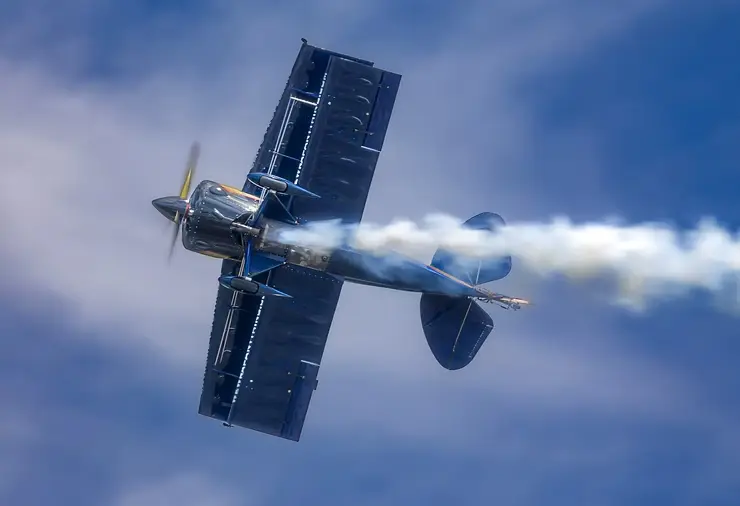
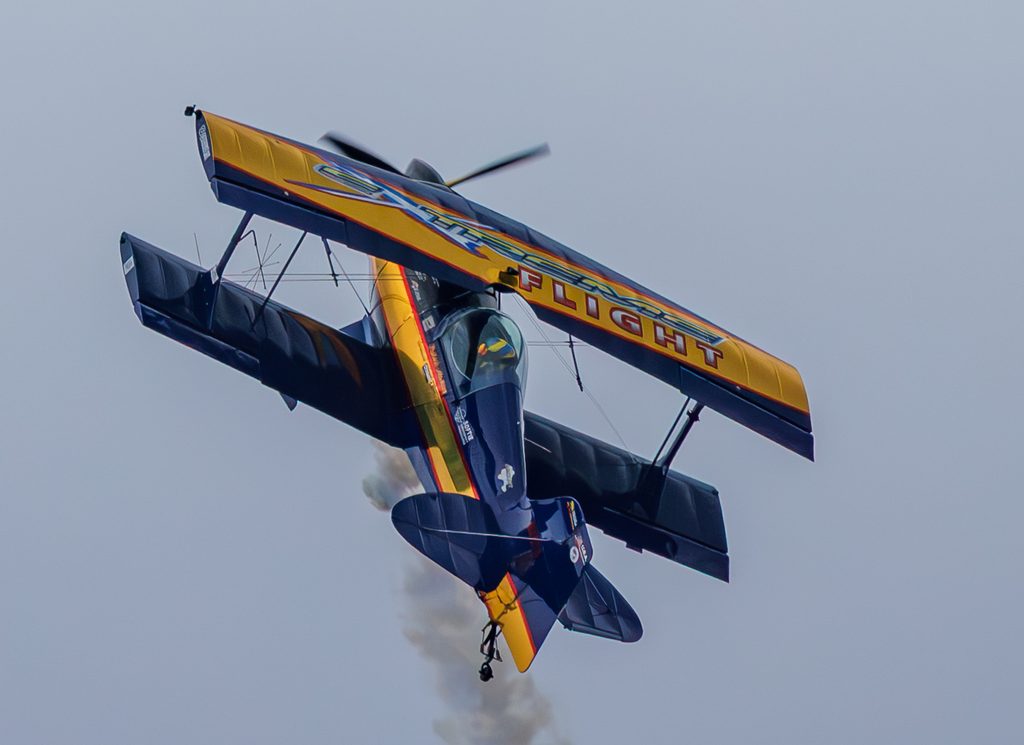
For me, an airshow has never been only about the few minutes I spend flying the Blue Demon.
I love flying my Pitts S-1S. Aviation has shaped almost every part of my life—as an airline captain, an A&P mechanic, a former aerobatic competitor and now an airshow performer. But one thing that is super important to Natalia and me is connecting with the community.
Flying may be what first gets people to stop and look toward the sky. What happens on the ground is where the connection begins.
Bringing Airshow Fans Inside the Experience
Janesville marked a major first for our Extreme Flight team. It was the first show where we debuted our new DOF Reality motion VR experience as part of the Extreme Flight STEAM Experience in the CCI Kids Educational Zone.
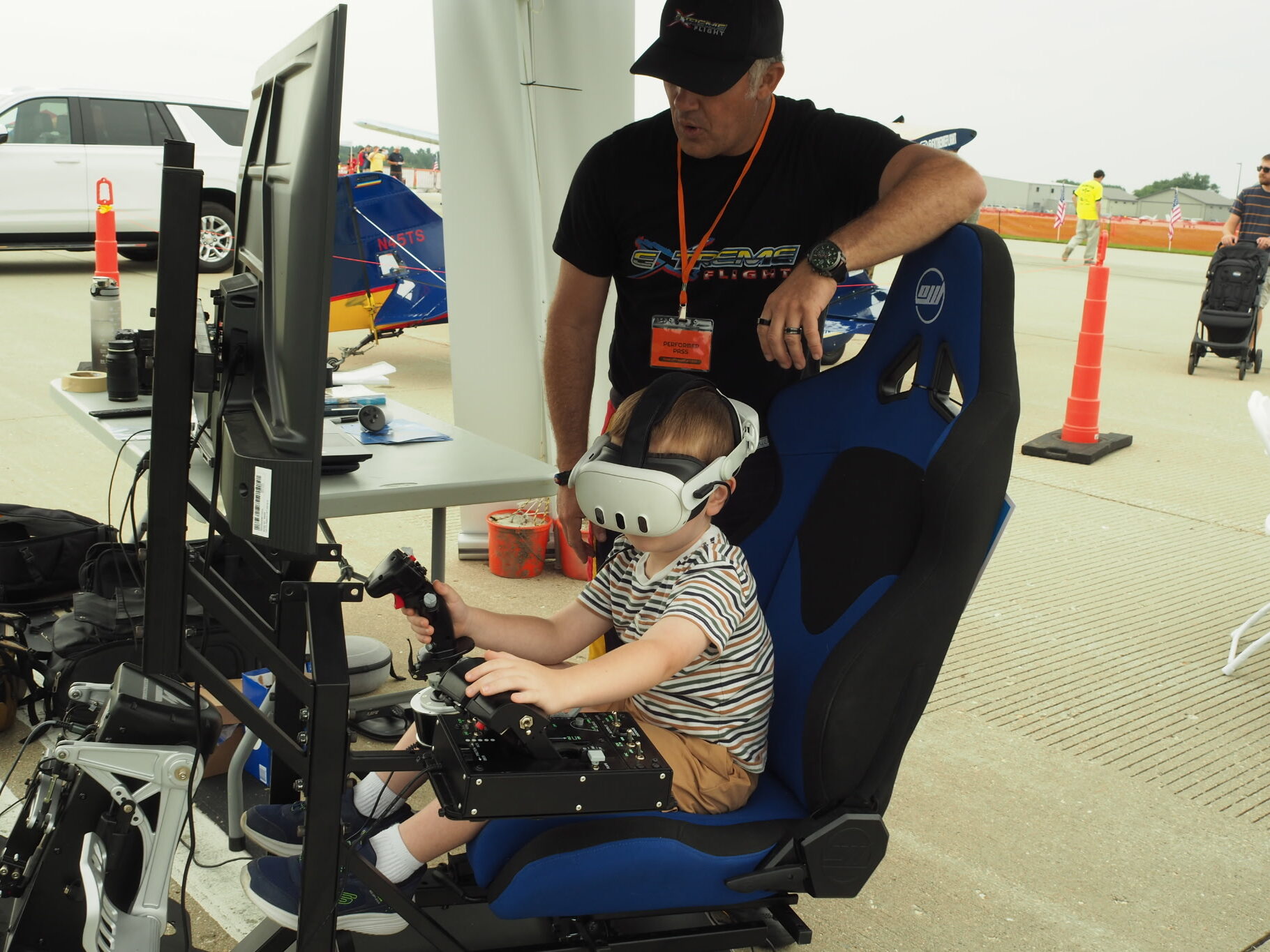
Day 1 started with a 6 a.m. wake-up so we could be at the airport by 7:30. We pulled out the simulator, built the exhibit and got everything ready beside the Blue Demon near the main gate. Standing there in Janesville, surrounded by the aircraft, the VR system and the motion platform, it felt like the epitome of everything Natalia and I have been building.
Fans could meet us at the exhibit, sit inside the motion simulator and experience a version of the flight through VR. Then, later that day, they could step outside and watch my solo high-energy performance live. The aircraft, the education and the performance were finally together in one place.
We wanted to answer a question people ask me all the time: What does it actually feel like to fly?
This was more than putting on a headset and watching a virtual flight. When the airplane climbed, turned or maneuvered inside the simulation, the platform moved with it. For a few minutes, fans were no longer standing outside the experience watching someone else fly. They could take the controls and feel a small part of the movement for themselves.
The most important part was not simply letting kids take a virtual flight. I sat with them and taught them the basic concepts of flight while they were in the seat. We talked about how an airplane climbs, turns and responds to the controls. As they made each input, the DOF motion platform moved beneath them, turning an explanation into something they could physically feel.
That changed the way the lesson landed. A child could hear me explain what happens when an airplane banks, then move the controls and feel the platform follow. The headset placed them inside the flight, but the motion helped connect what they were seeing to what the aircraft was doing.
Some kids took to the controls right away. Others made every movement carefully. I could see the concentration behind the headset as they began connecting their hands to the movement of the airplane. Parents watched from behind the simulator, and nearly everyone stepped out smiling, laughing and ready to tell us what they had felt.
The simulator created a bridge between the ground and the sky. Kids could learn directly from an actual airshow performer, experience how science, technology, engineering, art and math shape a flight, and then walk outside to watch me apply those same principles in the Blue Demon.
That connection is why we built this.
Not everyone will have the chance to climb into an aerobatic airplane. But we can still bring people closer to the cockpit. We can let them feel the airplane respond, help them understand the coordination behind each movement and create a place where their questions are welcome.
For us, that is what STEAM education should feel like: not something happening on a page or behind a screen, but something you can see, feel and connect to the real world.
Our media team, Wendell and Howard, helped us preserve those moments. They photographed the kids, families and reactions around the simulator—not only the polished parts of the exhibit, but the concentration, surprise and connection that made the experience real.
Wendell also brought an instant camera so guests could leave with a Polaroid from the experience. In a weekend filled with phones, videos and fast-moving moments, people were handed a physical photograph they could hold onto. It was a small keepsake, but it gave families something tangible to remember the moment they stepped inside the experience.
None of this would have happened in Janesville without people who believed in what we were building. Jamal Steward sponsored my appearance and helped make it possible for us to bring the airplane, the performance and the full Extreme Flight STEAM Experience together at Pistons & Props. That support gave us the opportunity to do more than fly. It allowed us to spend time with the community and create an experience that continued long after the airplane landed.
Day 1: A Weather Break and a Broken Smoke Line
As the first day moved along, the rain began to settle in. The ground became slippery fast, and we kept watching the weather for a safe opening.
Then we got one.
The break was just long enough for me to launch and begin the routine. But during my torque roll, the main smoke line ruptured. I started getting soaked with smoke oil, and only a few maneuvers into the performance, I made the decision to land.
That is airshows. The crowd may see a maneuver stop or an airplane return early, but inside the cockpit, every decision comes back to safety. We had found a small window in the rain, but a mechanical issue closed it just as quickly.
The good news was that it was a simple fix. Blackhawk Maintenance in Janesville stepped in and hooked me up with a replacement line. That kind of support means a lot when you are away from home, working between weather windows and trying to keep the weekend moving.
Once the flying was done, our work on the ground continued. We loaded the simulator back up and secured everything for the night. By the time our day finally ended, it was 9 p.m. We were wet, tired and already thinking about getting up to do it all again the next morning.
Day 2: Back Before Sunrise
Day 2 began with a 6 a.m. wake-up and another early trip to the airport. We brought the simulator back out, rebuilt the experience and spent the morning with the crowd until it was time for me to begin preparing to fly.
Then pop-up storms started building ; storms that had not even appeared on the radar.
We had to close the exhibit early and secure both the airplane and the simulator as the weather moved in. It is a lot of equipment to protect in a very short amount of time, and everyone had to move quickly.
But the weather did not stop us, and it definitely did not stop the relentless fans who stayed with us.
Another break opened, and we were able to put a modified performance into the sky. It was not the routine we originally planned, but airshows require you to work with the conditions you are given. We adjusted, stayed inside the safe window and gave Janesville a show.
The Crowd Made the Weekend
Rain changes the rhythm of an airshow. Schedules shift. Equipment has to be protected. Producers, volunteers, pilots, crews and airport teams stay in constant communication while safety remains the priority.
The crowd has a choice, too. They can stay home.
Janesville showed up anyway.
Families explored the aircraft, cars, exhibits, simulators and hands-on activities. Kids kept coming through the educational zone. People stayed curious even when the weather made the weekend less comfortable. The atmosphere never disappeared. If anything, the rain made the sense of community easier to see.
A full airshow does not return after 14 years because of one performer or one organization. It takes years of planning and a huge team of airport personnel, volunteers, sponsors, vendors, public-safety teams and community members who believe it is worth doing.
I have a tremendous amount of respect for the people who kept working through the changing conditions and for every fan who came through the gates.
That is the part of this industry people do not always see. A performance may last only a few minutes, but it is built on preparation, teamwork, communication and trust. And I DO MEAN TRUST.
More Than a Performance
We came to Pistons & Props ready to share Extreme Flight in two connected ways: through a high-energy aerobatic performance in the Blue Demon and through a hands-on experience that brought fans closer to what happens inside the cockpit.
The weather became part of the story, but it was not the whole story.
The real story was an aviation community returning to the airport. It was thousands of people choosing to show up. It was kids discovering how an airplane responds to their hands. It was families surrounded by aircraft, movement and conversations about what might be possible for them.
And for Natalia and me, it was the beginning of something new.
Janesville will always be the place where we first introduced our DOF Reality motion VR experience to airshow fans. Watching people step inside that experience confirmed why we worked so hard to build it. We want Extreme Flight to be more than just the time I spend in the sky. We want people to meet us, ask questions, experience aviation for themselves and feel that there is a place for them in this community.
Thank you to Jamal for sponsoring my appearance and believing in the complete experience we wanted to bring to Janesville. Thank you to Wendell and Howard for documenting the weekend and giving families memories they could carry home. And thank you to Propel Forward, the Pistons & Props team, Southern Wisconsin Regional Airport, every volunteer who kept moving through the rain and every person who walked through the gates.
You helped bring a full airshow back to Janesville—and we are proud to have been part of it.